
Poetry & Photography: Reflections of West Cornwall
I have known Cornwall-based photographer Alistair Common for twenty-five years and recently we decided to work together on an exhibition of his photographs and my poems to be held next month (November 2024) at The Forum in the University of Exeter (see full details here).
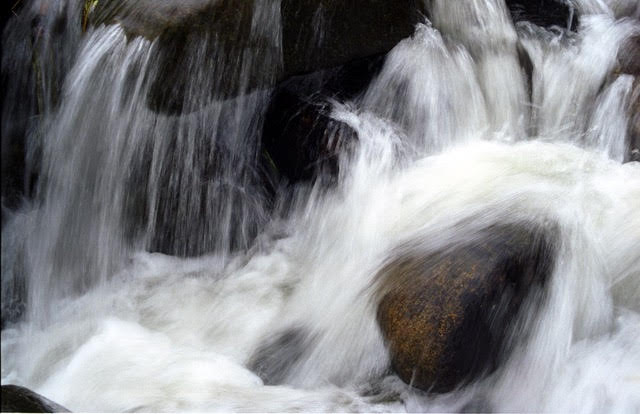
But the idea had been germinating for far longer than that, ever since I saw his luminous print ‘Portheras Stream’ at an exhibition at the Polkadot Gallery in Exeter several years earlier. At once I was reminded of a poem I had written for my 2004 collection Chasing Catullus in a sequence tracing the course of the illness and, tragically, death of my very young niece from cancer.
‘Niobe’ was based on a few lines from a choral passage in Sophocles’ tragedy Antigone, which references the Greek myth of the mother turned to stone as she grieves for the death of her nine children. A literal translation of the original reads (Antigone is singing):
‘I have heard with my own ears how Niobe, daughter of Tantalus, perished in so much suffering on steep Sipylus—how, like clinging ivy, the stone embraced and imprisoned her. And the rains, they say, do not leave her melting form, nor does the snow, and in lamentation tears pour from the brow of the hills over the ridges beneath… ‘(Antigone, ll.823-30)]
For my own poem, I elaborated on this brief snatch. And where Sophocles locates these events in a remote, mountainous region of Lydia in Asia Minor, I relocated the imagery to Britain and the far west of Cornwall, our family home. And I personalised the piece with a new subtitle, a date and time in my sequence’s progression.
Alistair’s photograph echoes not only the geographical description of the piece but also the intensity of its emotions. The streams flow around the rock as if being cut in two by grief. The spray feels icy cold. Yet there is healing in its clear waters. Affirmation.
That said, our intention throughout planning the exhibition was not to offer a literal trade-off between verbal and visual forms but a dialogue, without need for explication, revealing how each can co-exist, each complement the other. We are interested in the exchange of art forms, in the translation and reception between classical and contemporary cultures and landscapes – whether Cornish or ancient Greek – but above all between the image and the written word.
Niobe
(2/8: 7.22 AM)
Like a cloud-burst on a Penwith day
that had to come yet still startles, shocks;
think of granite veined with pale-rose quartz,
a fret of stone where the bracken’s frayed
by aching, flint-pierced, moorland streams;
the bind of ivy, the prick of gorse,
hedged in with comfrey, helleborine;
sob of rain, scar of hail, snow shrinking
to sigh. The sound of words you can’t say.
Josephine Balmer
 The Paths of Survival